
Our Vision
is that tribal nations, tribal communities and Indigenous people are happy, healthy and prosperous and that traditional ways of life are honored, valued and respected.

How We Can Help
I'm Looking For...
Agency Initiatives

Missing and Murdered Indigenous Women and Relatives Task Force
The Missing and Murdered Indigenous Women and Relatives (MMIWR) Task Force Act establishes collaboration with tribal governments, tribal law enforcement, and the U.S. Department of Justice to determine the scope of the problem, identify barriers, and create partnerships to improve processes for reporting and investigating cases.

Energy Transition Act
The Energy Transition Act (ETA) was developed over the course of a year with collaboration by community organizations, unions, energy groups and advocates, the ETA establishes New Mexico as a national leader in clean energy. The ETA sets a statewide renewable energy standard of 50 percent by 2030 for New Mexico investor-owned utilities and rural electric cooperatives and a goal of 80 percent by 2040, in addition to setting zero-carbon resources standards for investor-owned utilities by 2045 and rural electric cooperatives by 2050.

Indigenous Youth Council
The Indigenous Youth Council (IYC) was formed in February 2021 following two listening sessions that the IAD held with tribal youth from across the state. Issues discussed ranged from the desire to have access to higher education resources to behavioral and mental health needs for tribal communities. Participants also voiced the desire to have more intertribal connections between the Nations, Tribes, and Pueblos in the state.
IAD provides this space to come together to share mutual experiences, collaborate on shared initiatives, and build community.
Behavioral Health/Suicide Prevention
The Behavioral Health Program is committed to support and enhance the physical, mental, social, and spiritual health of NM Tribal Indigenous Peoples.
Programs & Funding

Tribal Infrastructure Fund
Through this competitive funding, all federally recognized tribes, nations and pueblos within New Mexico have an opportunity to submit a robust project proposal for their community.

Capital Outlay
Capital Outlay funds are used to build, improve or equip physical property that will be used by the public.

Special Projects
Special project grant funding is not intended to be a permanent funding source for entities but rather a short-term allocation. Consequently, projects should demonstrate progress towards self-sustainability.
Tobacco Cessation and Prevention Programs
These programs are focused on building tribal capacity to implement culturally appropriate tobacco cessation and prevention initiatives that recognize the unique ceremonial uses of tobacco while reducing the use of commercial tobacco use and its harmful effects.


News & Announcements
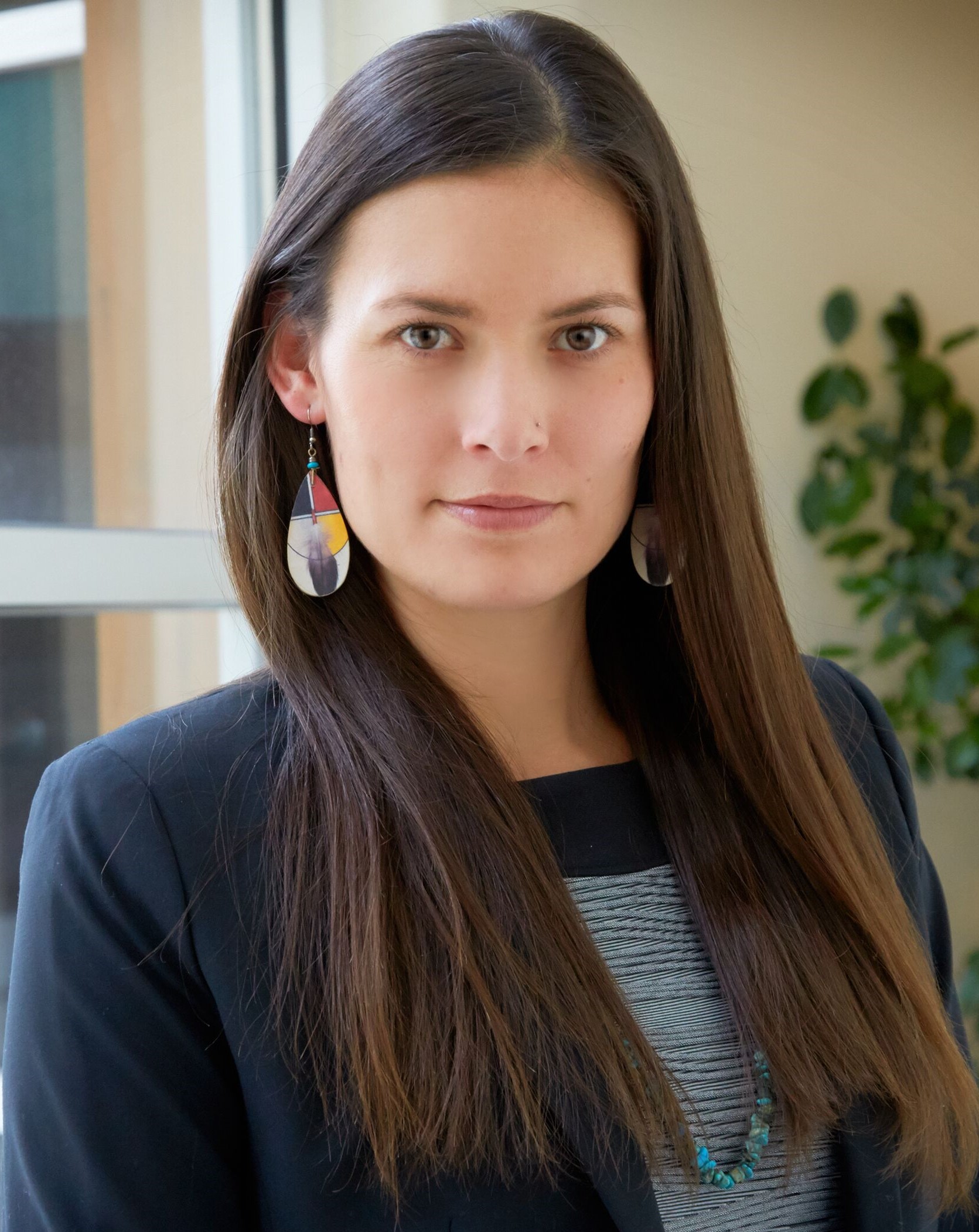
Josett D. Monette
Cabinet Secretary Designate
Josett Monette is a member of the Turtle Mountain Band of Chippewa Indians. She currently serves as the Cabinet Secretary Designate for the New Mexico Indian Affairs Department (IAD). As Cabinet Secretary Designate, Josett oversees IAD’s programs, including tribal environmental, tribal consultation, and MMIP initiatives. Her General Counsel work consists of providing advice and counsel on a variety state and tribal matters and advising the Department on a variety of internal policies. Prior to joining IAD, Josett was the New Mexico Legal Aid Native American Program Director. The Native American Program serves indigent clients living on or near the Pueblos and provides legal services, mostly in tribal courts, in many areas of law including jurisdictional issues, violations of due process, custody, divorce, child support, defending against debt collections, probate matters, tribal criminal defense, ICWA, tribal housing matters, tribal employment matters, and representing respondent parents in Child in Need of Care matters. Josett is an Adjunct Professor for the University of New Mexico School of Law National Native American Law Student Association (“NALSA”) Moot Court Team. She recently served as a Commissioner for the Pueblo of Tesuque Gaming Commission. Previously, she worked as a Staff Attorney at NMLA Native American Program, an Associate General Counsel for the Pueblo of Isleta, and as an Associate Attorney with Barnhouse, Keegan, Solimon, & West, LLP, an Indian Law Firm in Albuquerque which provides representation to tribes and tribal businesses throughout the country. Josett served on the Board of Directors for the New Mexico State Bar Indian Law Section for seven years and sits as an Attorney Bar Exam Coach. She has assisted with planning several CLE Conferences, most recently including helping to plan the Federal Bar Indian Law Conference. She holds a JD, with a certificate in Indian Law from UNM School of Law, a M.Ed. in Educational Leadership, B.S.Ed. in Secondary Education – Social Sciences, and B.A. in (American) Indian Studies from the University of North Dakota. Prior to her legal career, Josett was an educator and worked in education mostly on her home reservation in the Turtle Mountain Community. She has three amazing children that she raised as a single mother, and she loves to do Zumba.

Sign Up For The Newsletter
IAD Insight
Location
Wendell Chino
1220 S. St. Francis Dr.
Santa Fe, NM 87505
Contact Us
(505) 476-1600